
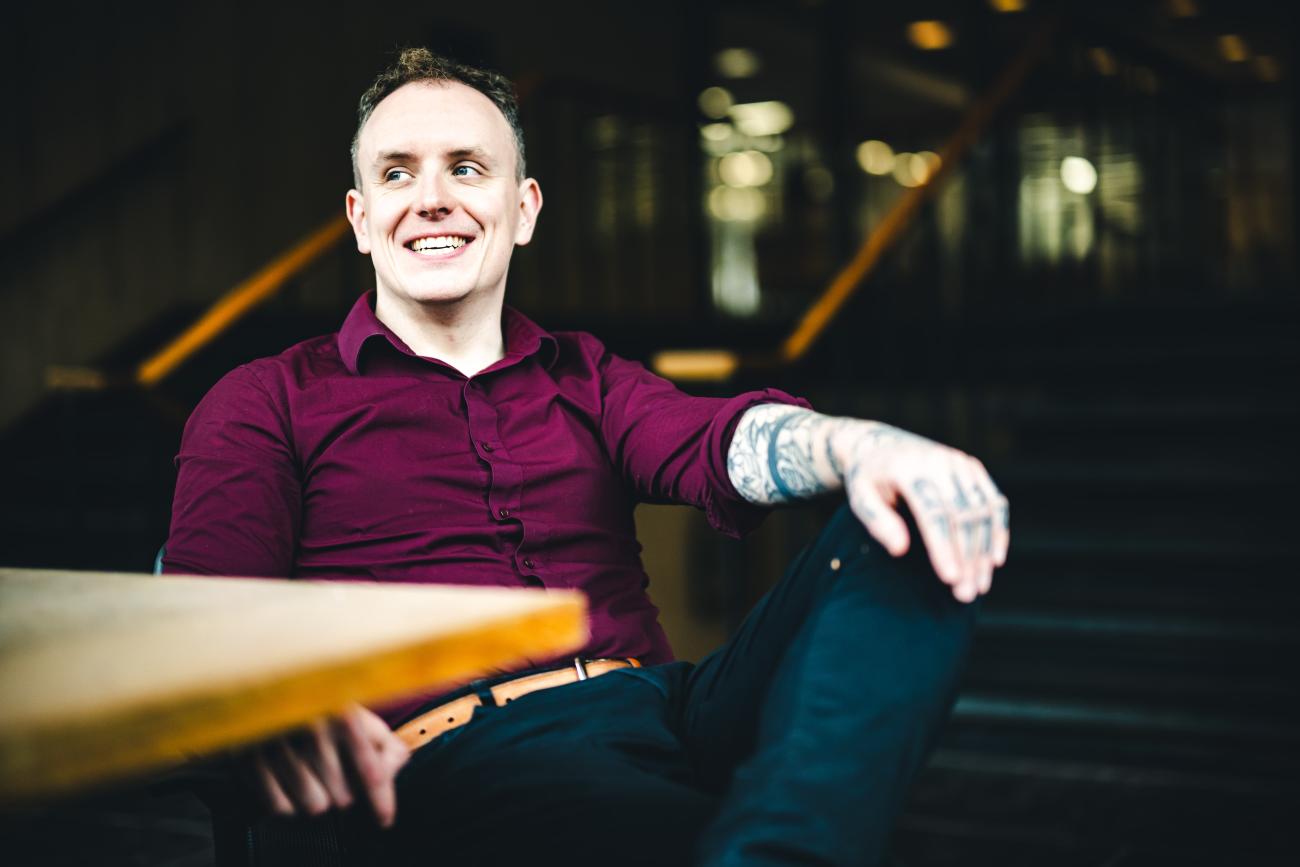
Designing Molecular Tools to Outsmart Cancer's Resistance to Treatment
Biochemist Daniel Laverty develops functional assays to understand how cancer cells hijack DNA repair pathways and how to stop them
Every day, the DNA in each of our cells suffers thousands of attacks. Air pollution, cigarette smoke, background radiation, and even routine cell division can damage the genetic code that keeps us alive. Fortunately, our cells are equipped with sophisticated repair machinery, a suite of enzymes that detect and fix DNA damage before it leads to mutations or cell death.
But this protective system can go awry. Some of the most important cancer therapies work by damaging DNA. Cancer cells will therefore hijack DNA repair machinery to fix the therapy-induced damage and resist frontline treatments. Developing innovative tools to understand exactly how cancer cells exploit DNA repair and how to turn that knowledge into better treatments is the focus of work underway by biochemist Daniel Laverty.
Laverty is a new addition to the chemistry department, and his research creates functional assays, molecular tools that measure specific DNA repair pathways in living cells. These assays address a fundamental challenge in cancer research. DNA can be damaged in myriad ways, making it difficult to pinpoint which repair pathways are most important in any given tumor.
"If you just treat cells with radiation, you're actually making 100 different types of DNA damage," says Laverty, assistant professor of chemistry. "So then it becomes really challenging. Let's say you have one tumor that was killed by radiation and one that was resistant. Which one of those 100 DNA lesions killed this tumor, but not that tumor?"
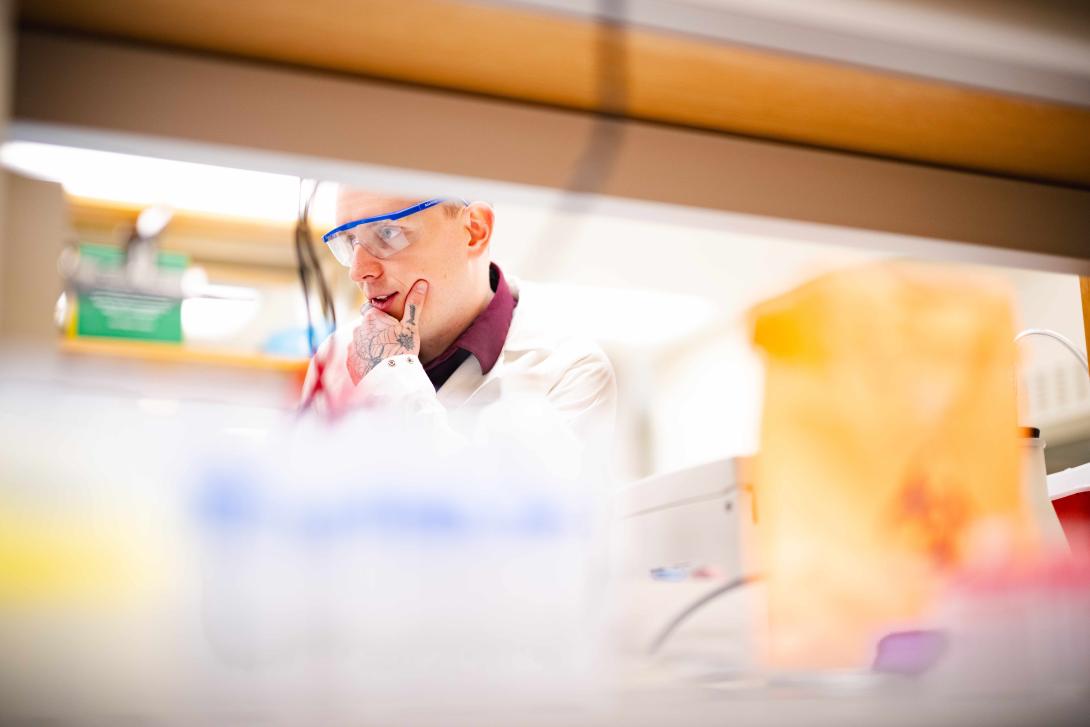
His solution is elegant. His lab creates circular DNA molecules called plasmids that encode for fluorescent or luminescent proteins. Then they introduce a specific type of DNA damage, and transfer the plasmid into human cells, where they exist separately from the cell's chromosomes. If the DNA damage gets repaired, the cell will emit fluorescence or luminescence, providing a readout of how efficiently the cells repaired the DNA damage.
"We can use simple lab strains of bacteria to make large amounts of a normal plasmid, then we use biochemistry to modify the plasmid and incorporate the DNA damage. We want to figure out which cancer cells are going to be more sensitive to precision therapies rather than conventional therapy. The goal would be to give maybe a small amount of radiation or chemo and then inhibit one of the DNA repair pathways.”
Laverty's research program has two complementary goals. First, his team investigates the fundamental molecular mechanisms of DNA repair, particularly focusing on how cells handle double-strand breaks, the most dangerous type of DNA damage, and a process called translesion synthesis, which allows cells to tolerate unrepaired damage and restart DNA replication.
The second thrust has direct clinical implications, understanding how cancer cells develop resistance to treatment. Many cancers initially respond to chemotherapy or radiation but eventually become resistant. Laverty suspects that cancer cells activate error-prone repair pathways that generate mutations, essentially accelerating their own evolution to develop drug resistance.
"This is something that happens in bacteria where they respond to antibiotics or other stressors by essentially making mutations on purpose. This accelerates evolution in the bacterial population and can select for antibiotic-resistant cells," Laverty notes. Similar mechanisms have been observed in colorectal cancer, and his functional assays offer one of the only practical ways to detect when cancer cells activate these mutagenic pathways.
The ultimate goal is more precise cancer therapy. Current treatments like chemotherapy work by overwhelming cells with DNA damage—they kill cancer cells effectively but also harm healthy, rapidly dividing cells throughout the body, causing severe side effects. Laverty envisions a different approach-–combining lower doses of conventional therapy with targeted inhibitors of specific DNA repair pathways. The strategy exploits a weakness in cancer cells. Many have mutations in certain repair pathways, making them dependent on alternative pathways that healthy cells don't rely on as heavily.
"In healthy cells in the body, all the repair pathways should be intact," Laverty says. "So if we inhibit one pathway with a drug, the other pathways can compensate for it, and the healthy cells should be okay. But the cancer cells are deficient in a critical DNA repair pathway, so they should be very sensitive to DNA repair inhibition. If we treat with a low dose of chemo and combine that with a DNA repair inhibitor, one that inhibits the pathway we’ve found to be essential only in cancer cells, we hope that combination will totally wipe out the cancer cells but spare the healthy cells, reducing side effects."
The timing is promising. DNA repair has become a hot therapeutic target in the pharmaceutical industry, with numerous inhibitors against different repair enzymes now in development. Laverty's assays can help identify which pathways are altered when cells acquire treatment resistance, then guide the selection of appropriate inhibitors from this growing arsenal.
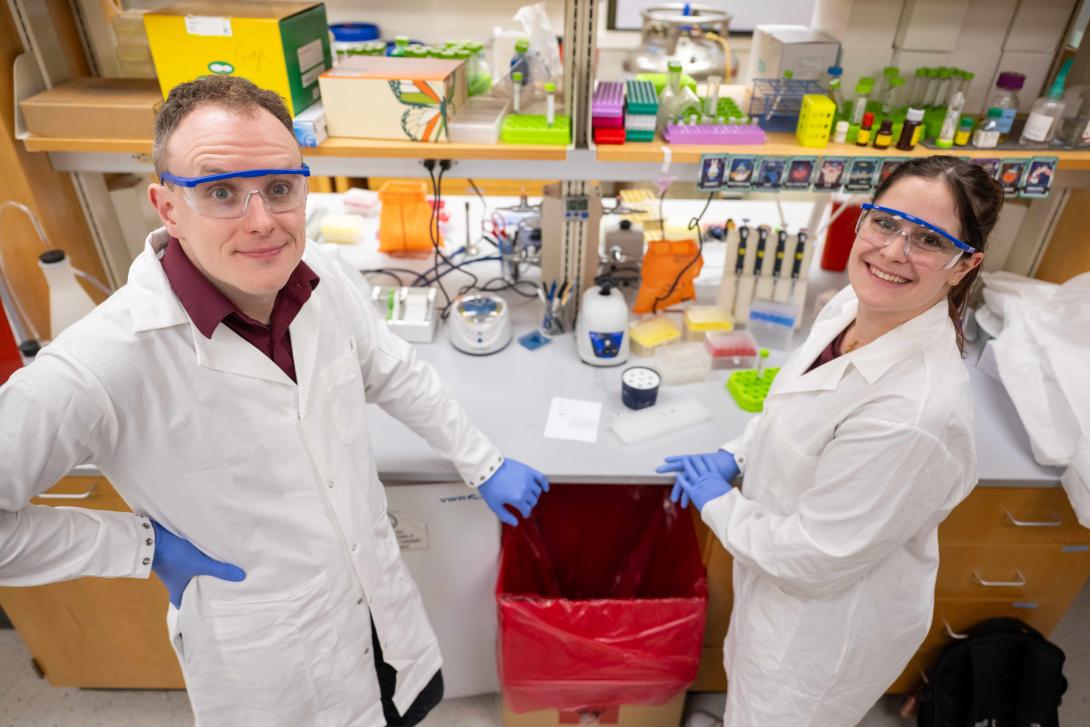
Now establishing his lab at Lehigh with a technician, four undergraduates, and plans to bring on two or three graduate students, Laverty is moving quickly from setup to discovery. The lab is already generating data and will soon have access to a newly renovated cell culture facility. By understanding exactly how cancer cells resist treatment, and designing functional assays that can detect this resistance in real time, his work could help move cancer therapy from a blunt instrument to a precision tool.